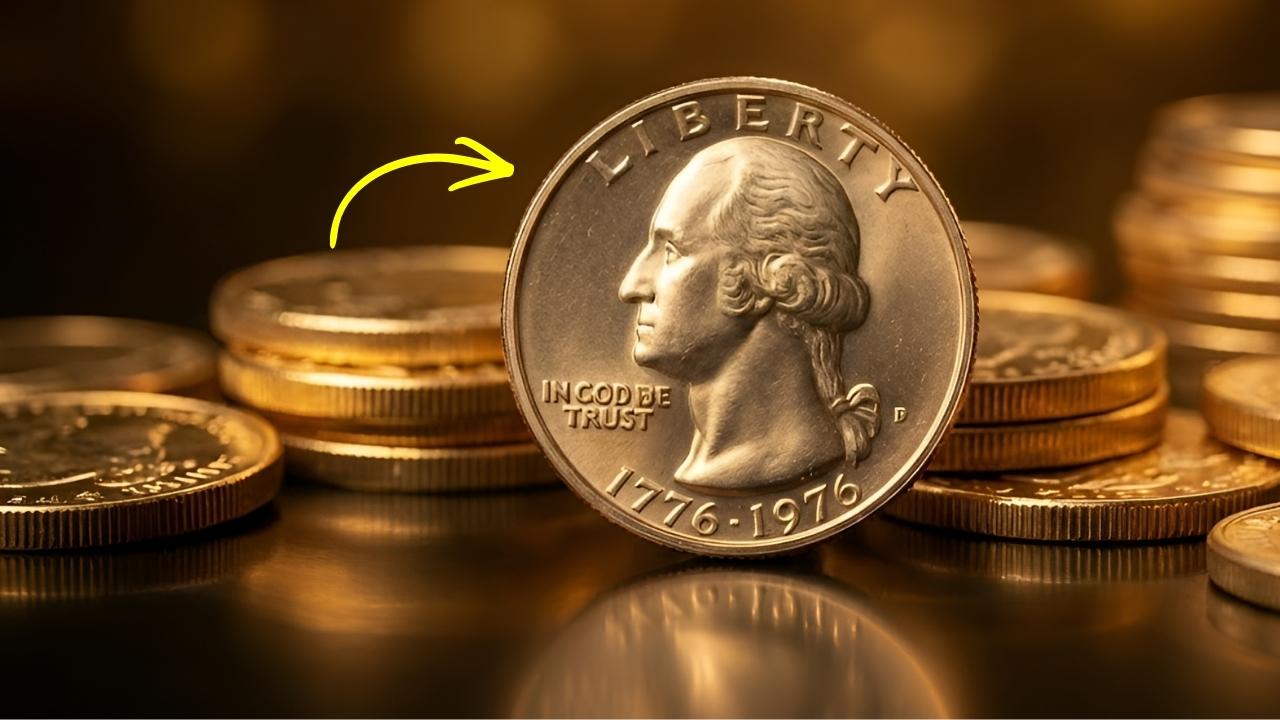
1976 Bicentennial Quarter Value 2026: The 1976 Bicentennial Quarter is not just another old U.S. coin lying forgotten in drawers. Even in 2026, it remains one of the most discussed and searched coins among American collectors. Issued to mark 200 years of U.S. independence, this quarter carries historical emotion, mass public ownership, and hidden rarity all at once. While millions were minted, only a small percentage hold real value today. What makes this coin special is how ordinary it looks, yet how extraordinary certain versions can be.
Bicentennial Design That Changed History
Unlike regular Washington quarters, the Bicentennial edition features a colonial drummer on the reverse side instead of the eagle. This single design change makes it instantly recognizable. The dual date 1776–1976 also sets it apart from all other quarters. Collectors value this design because it represents a once-in-a-lifetime national celebration. In 2026, demand remains strong simply because no modern U.S. quarter has ever repeated such a bold commemorative redesign at a national scale.
Mint Marks That Control Value
Mint marks are the first thing serious collectors check. Bicentennial quarters were produced at three mints. Philadelphia coins have no mint mark and are the most common. Denver coins carry a D and are slightly more desirable in higher grades. San Francisco coins, marked with an S, are the most valuable category overall. Many S-mint quarters were produced as proofs or silver issues, making them far more collectible than standard circulation strikes.
Silver Content That Raises Prices
One major reason some Bicentennial quarters are valuable is silver. Special collector sets included quarters made of 40 percent silver rather than copper-nickel. These silver versions were never meant for circulation, yet many ended up mixed with regular coins over time. In 2026, rising silver demand adds intrinsic value to these coins. Even worn silver Bicentennial quarters are worth significantly more than face value, especially when confirmed by weight and edge color.
Error Coins That Create Buzz
Mint errors are where prices can jump dramatically. Bicentennial quarters are known for several types of errors that collectors actively hunt. Double die obverses show visible doubling in letters or dates. Off-center strikes leave part of the design missing. Clipped planchets result in curved missing edges. These errors happened during high-speed production and cannot be recreated. In 2026, clear and dramatic errors regularly sell for thousands when authenticated.
Condition That Separates Ordinary From Rare
Condition plays a massive role in determining value. Because so many Bicentennial quarters were circulated, finding one in near-perfect condition is difficult. Coins graded MS67 or higher are considered scarce despite high mintages. Strong luster, clean surfaces, and sharp details are essential. Even a tiny scratch can reduce value sharply. Certified high-grade coins are preferred by investors because they offer stability and long-term desirability in the collector market.
Proof Coins With Mirror Finish
Proof Bicentennial quarters deserve special attention. These coins were struck with polished dies and planchets, resulting in mirror-like surfaces. Most proof coins came from the San Francisco mint. While millions exist, flawless examples are rare. Hairlines, milk spots, or haze can lower value significantly. In 2026, deep cameo proof quarters with strong contrast and professional grading continue to command premium prices among advanced collectors.
Hidden Varieties Few People Notice
Some valuable Bicentennial quarters are not obvious at first glance. Subtle die varieties, weak strikes, and unusual textures can indicate rare production anomalies. Experienced collectors use magnification and weight scales to inspect coins closely. Small differences in lettering thickness or spacing can identify collectible varieties. Many valuable examples were overlooked for decades because owners assumed all Bicentennial quarters were common.

Market Demand In 2026
The coin market in 2026 favors coins with historical significance and strong visual appeal. Bicentennial quarters benefit from nostalgia and wide recognition. While viral claims about million-dollar quarters are often exaggerated, real auction data shows consistent demand for top-tier examples. Certified silver issues, rare errors, and high-grade coins continue to rise steadily in value. Ordinary circulated quarters, however, remain worth face value.
Authentication That Protects Value
Professional grading is crucial for serious value. Coins certified by PCGS or NGC gain trust and liquidity. Authentication confirms whether a coin is silver, an actual error, or simply damaged. In 2026, buyers are cautious and rely heavily on third-party grading. Ungraded coins may still have value, but certification opens the door to higher prices and easier resale in competitive markets.
Storage That Preserves Worth
Proper storage plays an underrated role in long-term value. Bicentennial quarters stored in soft flips, capsules, or climate-controlled environments age far better than loose coins. Exposure to moisture, air, and handling causes toning and scratches. Collectors who protected their coins decades ago are now rewarded. In 2026, condition preservation is one of the biggest differences between valuable coins and ordinary change.
Common Myths That Mislead Owners
Many people believe every Bicentennial quarter is valuable. This myth leads to disappointment. Most were minted in massive quantities and circulated heavily. Value comes from rarity, silver content, condition, and errors, not age alone. Understanding this prevents unrealistic expectations. Education is essential before selling or investing. Informed collectors focus on facts, not viral headlines or exaggerated online claims.
Final Verdict On Bicentennial Value
The 1976 Bicentennial Quarter remains one of the most fascinating modern U.S. coins in 2026. While most examples are still worth only 25 cents, a small group stands far above the rest. Silver versions, rare errors, proof coins, and top-grade specimens can bring serious money. The key lies in knowledge, careful inspection, and authentication. That ordinary-looking quarter may not change your life, but the right one can certainly surprise you.